Master pH balance, cuticle alignment preservation, gentle surfactant selection, hard-water detoxing, and South African climate hydration routines designed to keep virgin strands luminous for years.
True single-donor Vietnamese hair differs fundamentally from lower-tier factory hair in one crucial structural trait: its intact outer cuticle layer remains alive with resilient natural scales that overlap cleanly from root toward tip, much like ceramic roof tiles sloped to shed rainwater smoothly. Because harvested strands no longer receive continuous sebum secretions directly from a living scalp follicle, long-term lustre depends entirely on how thoughtfully you replace gentle external moisture while shielding those precious microscopic scales from alkaline shock and mechanical abrasion.
Ironically, most premature damage to high-grade virgin wigs and bundles happens not from wear itself, but from overly aggressive maintenance habits learned from overly processed hair extensions: scalding shower rinses, heavy silicone glazes that suffocate elasticity, circular towel scrubbing, and daily alcohol-rich holding sprays. By adopting calm, scientifically grounded care rituals calibrated for raw hair architecture, a carefully curated unit can remain velvety, tangle-resistant, and radiantly glossy well beyond its fourth or fifth anniversary.
1. The Microscopic Biology of Intact Hair Cuticles
Every human strand consists of three distinct concentric regions: an inner sponge-like medulla, a fibrous middle cortex packed with helical keratin proteins that grant tensile snap and colour depth, and a translucent protective armour of overlapping cuticle shingles six to ten layers deep. Virgin Vietnamese donor hair typically exhibits thicker cuticle depth than average European hair and less chemical porosity than heavily steam-processed synthetic blends.
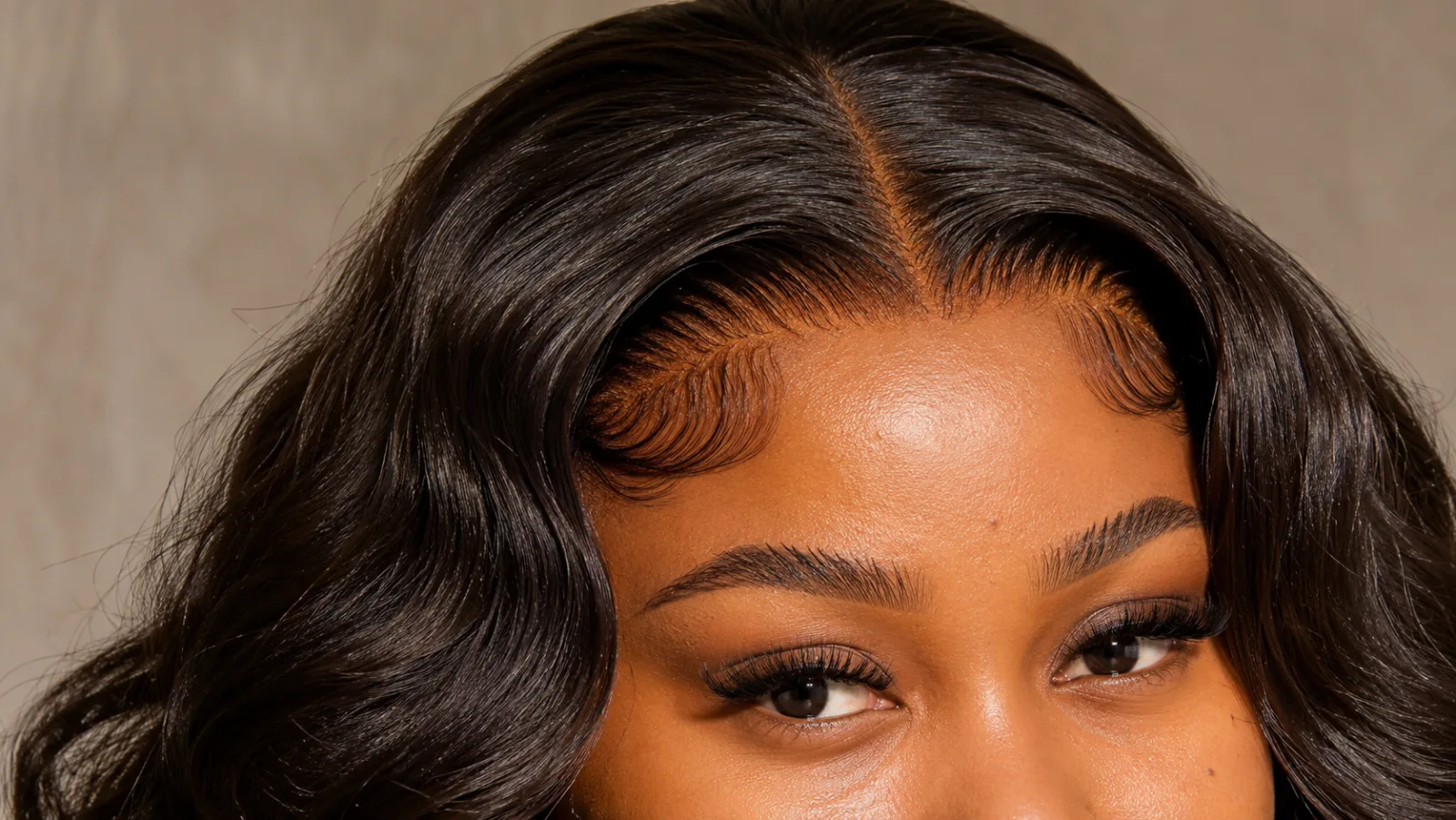
When cuticles lie smooth and compressed flat against the cortex, white light hits the surface evenly and reflects right back cleanly into the eye — producing what editorial stylists refer to as natural glass shine. When exposed to excessively hot wash water, alkaline clarifying shampoos above pH 7.0, or rough upward back-combing, those tiny shingles swell open and catch against adjacent strands like miniature Velcro hooks. Once cuticles fracture or snag together, irreversible dryness and nape matting quickly follow.
2. Why Cleanser pH Matters Far More Than Price Tags
Human keratin reaches peak structural harmony inside a mildly acidic corridor measuring roughly pH 4.5 to pH 5.5. Unfortunately, conventional supermarket clarifying bars, dishwashing soaps occasionally recommended on social media for stripping glue residue, and high-foaming sodium lauryl sulphate shampoos routinely climb past pH 8.0. Alkaline environments forcibly lift cuticle flaps outward, swelling the hair shaft and flushing out internal lipids during rinsing.
Select moisturizing liquid cleansers explicitly formulated free of harsh sulphates, drying isopropyl alcohols, and synthetic beeswax thickeners. Look for calm, slip-enhancing botanical ingredients such as coco-glucoside, panthenol (pro-vitamin B5), hydrolysed silk amino acids, and lightweight squalane near the front of the ingredient deck. Equally critical is water temperature: rinse strictly with lukewarm to cool water so scales stay tight, vibrant, and sealed.
Never Submerge Hair in Scouring Dish Soap
While vinegar or baking soda soaks circulate widely online as wig clarifying hacks, repeated alkaline baking-soda baths strip natural protein elasticity rapidly. Save clarifying steps strictly for water-soluble adhesive edges around the lace hairline alone, protecting mid-lengths and ends exclusively with pH-balanced hydration masks.
3. Step-by-Step Immersion Wash Ritual (Every 10 to 14 Wears)
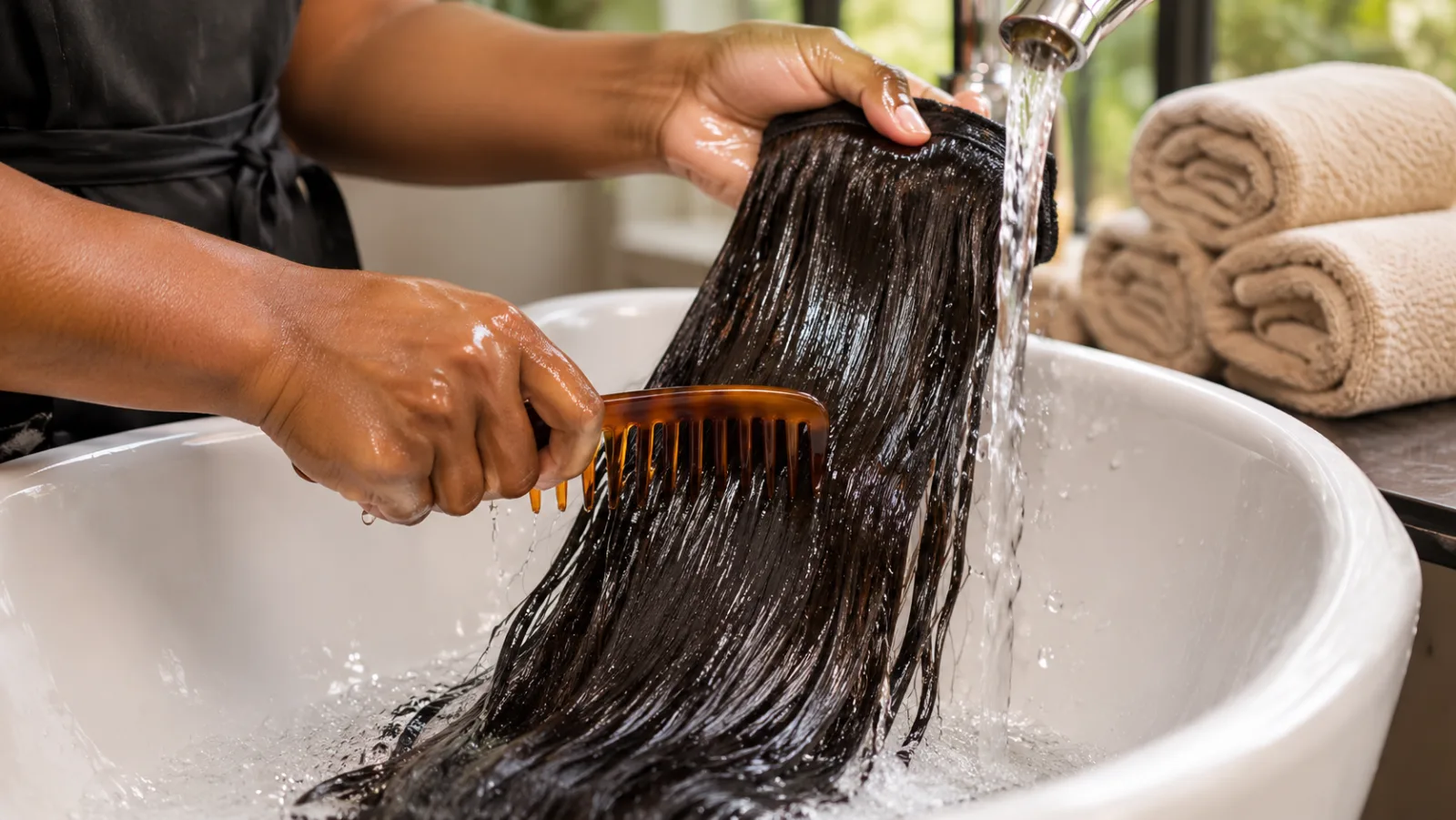
Wash frequency follows wear intensity rather than fixed calendar alerts. Unless heavy sweat, coastal salt mist, or dusty construction wind accumulates through the cap, washing virgin hair every ten to fourteen wears preserves natural integrity cleanly without leaching lipid resilience. Follow a deliberate unhurried cadence at a clean porcelain sink:
- Dry Pre-Detangle: Lay the wig flat over a dry linen towel and remove light surface knots using a wide-tooth bone comb working strictly upward in small three-inch increments from ends toward roots.
- Cool Satin Pre-Soak: Fill a clean basin with lukewarm water mixed with two pumps of moisturizing cleanser. Submerge the hair gently in one aligned direction without swirling or bunching lengths into a heap.
- Cleansing Stroke: Support the cap base firmly with one palm while gliding cleansed fingers smoothly downward along the hair grain for sixty seconds, rinsing residue thoughtfully around the lace front perimeter where makeup powder settles.
- Conditioner Slip & Wait: Squeeze excess water cleanly downward and apply a generous ribbon of silicone-free moisture conditioner from two inches below the knots down to the blunt ends (keeping heavy creams clear of tiny hand-tied closure knots prevents premature slippage). Allow hair to drink moisture for fifteen calm minutes inside cool ambient air.
- Cool Seal Rinse: Rinse completely under a steady, cool downward flow until strands feel crisp, supple, and squeak-free without waxy residue.
4. Protein vs. Moisture Balance: Reading What Your Strands Ask For
Just like skincare shifts between calm moisture barrier serums and mild exfoliation depending on winter wind or sunny holidays, raw human hair occasionally reveals subtle diagnostic clues in your fingers during conditioning sessions. Wet elasticity tells the clearest story instantly. Pluck one gentle stray shed hair wet in your hand cleanly between both thumbnails and stretch it lightly a few millimetres: healthy hydrated keratin yields smoothly softly by roughly ten to fifteen percent before snapping neatly right back to exact original geometry.
If dry hair feels slightly gummy or overly mushy when wet, stretches slackly forward like limp taffy without springing back, and refuses to hold loose curls past lunch, mild protein replenishment (using delicate silk or wheat amino treatments sparingly once every six washes) tightens strength cleanly back into balance. Conversely, if hair snaps briskly dry right away under fingertip pressure with crisp stiff rustle, step smoothly backward off heavy keratin reconstructors altogether and focus calmly on warm steam deep-conditioning hydration baths laced with oat amino and avocado lipids.
5. Drying Discipline: Why Vertical Gravity and Cool Air Win
Wet keratin bonds temporarily weaken by nearly thirty percent because water molecules insert themselves between hydrogen bridges inside the hair cortex. Vigorous scrubbing inside rough bath towels immediately stretches swollen strands beyond healthy yield thresholds and frays fragile ends into split halos. Instead, wrap wet strands calmly inside an absorbent microfibre cloth or soft oversized organic cotton T-shirt and press gently downward with flat palms to blot excess moisture.
Once damp rather than dripping, mount wigs squarely on an adjustable ventilated canvas block stand away from sunny window glass or space heaters. Air drying overnight protects natural bounce, eliminates frizz turbulence, and yields far longer bundle lifespan than blasting wet hair immediately with concentrated 1,800-watt handheld nozzles. Only pick up a paddle brush once strands reach ninety percent dryness.
6. Hard Water Mineral Buildup & Gentle Clarifying Detoxing
Across several South African municipalities with elevated natural calcium, magnesium, and trace iron inside tap pipes, otherwise faithful washing rituals can slowly leave pristine ebony hair tasting faint coppery tones or developing a dull film unresponsive to conditioners. Rather than scrambling endlessly through ten pricey oils hoping something sinks in, schedule one gentle chelating rinse every third or fourth full wash cycle.
Select clean gentle EDTA-chelating botanical shampoos formulated explicitly to lift mineral calcium ions cleanly off hair cuticles without alkaline stripping, followed immediately afterward with a fifteen-minute velvety moisture mask tucked smoothly inside a warm silk cap. Alternatively, pouring one final litre of cooled distilled or filtered jug water cleanly down newly conditioned hair seals shine brightly clear without leaving hard tap chalk drying inside scales.
7. Calibrating Care for Johannesburg Dryness vs. Coastal Humidity
South Africa presents dramatic regional microclimates that directly affect how exposed cuticles behave across the seasons. During dry Gauteng Highveld winters — where ambient relative humidity regularly plunges below twenty-five percent alongside dusty afternoon gusts — static electricity rapidly accumulates between sweater collars and fine ends, while low atmospheric moisture evaporates internal hydration away quickly.
Counter Highveld static with tiny micro-layers of lightweight non-greasy sealants: work a single pearl drop of refined abyssinian oil, camellia seed oil, or cold-pressed sweet almond oil evenly between fingertips before glazing lightly over the bottom four inches. Conversely, clients wearing hair along humid Umhlanga, Ballito, or Cape Town coastlines in wet weather should minimize raw glycerin sprays — since humectants pull excessive sticky moisture straight from humid sea air into the shaft — leaning instead toward weightless keratin sealing serums that keep cuticles calm against salt breezes.
8. Managing Shedding vs. True Breakage on Closures and Wefts
Understanding the visual anatomy of a stray fallen strand separates routine lifecycle shedding from preventable breakage. Examine any loose hair resting on your vanity brush: if a full, continuous long strand tapers toward one intact root anchor or loop, a single knot may simply have loosened — often traceable to scratching through lace mesh directly with pointed fingernails or over-saturating lace undersides with oil. Conversely, short snapped fragments measuring two to four inches reveal mechanical trauma or excessive thermal scorching.
When installing custom sew-in bundles from raw triple-stitched wefts, advise your stylist to work the curved needle around the stitched track cleanly rather than punching needles through woven thread bindings, and apply thin clear flexible weft sealer lightly along any trimmed ends. That single five-minute salon habit nearly eliminates weft shedding for the entire lifetime of your bundles.
9. Salon Consultation Script: What to Ask Before Cutting or Colouring Virgin Bundles
Even seasoned salon stylists handle unfamiliar high-purity Vietnamese bundles best when presented clear provenance expectations beforehand. Before allowing colourists to open developer bottles or drag thinning shears diagonally down thick double-drawn ends, share three explicit notes calmly inside consultation chairs: clarify hair rests completely unbleached untouched single-donor raw hair lifting cleanly without oily acid gloss layers; request gentle micro-strand testing inside hidden underneath occipital tracks cleanly prior to sweeping lightener upward across crown pieces; and advise weaving subtle curved needle stitches smoothly around reinforced weft borders rather than piercing straight across track threads so natural multi-year durability stays uninterrupted.
Asking transparent collaborative questions builds immediate mutual respect between attentive colourist and thoughtful wearer. Quality stylists welcome informed clients whose calm home maintenance protects salon artistry effortlessly across countless future wash days.
10. Long-Term Storage Between Seasons
A unit tucked loosely inside dusty plastic grocery bags gradually creases, absorbs kitchen aromatics, and bends delicate lace hairlines out of symmetrical alignment. Before resting a unit for more than four days, ensure strands are one hundred percent bone dry (trapped dampness encourages mildew inside woven cap bands), detangle gently in sleek alignment or two loose braids, and tuck cleanly inside a breathable pure silk dust pouch or suspended hanger cover inside a dark, cool dressing cupboard. Treat every piece with the patience afforded vintage cashmere, and your collection will greet every occasion flawlessly.
11. Care Calendar Quick Reference & Concierge Wash Checklists
- Daily Morning Habit (60 Seconds): Detangle dry ends gently upward using seamless horn or padded brushes; pat hairline silk edge flat under satin band cleanly before commuting.
- Nightly Evening Unwind (2 Minutes): Unfasten adjustable tension hook lightly; wrap sleek sets smoothly clockwise or plait deep wave units into calming thick loose protective plaits tucked gently beneath crisp mulberry silk.
- Bi-Weekly Cleansing Session (25 Minutes Active + Air Dry): Cold tepid water soak, pH 5.0 amino botanical wash downward, rich quince-or-squalane slip rinse, microfibre patting, cool natural air curing upright over breathable canvas forms.
- Quarterly Atelier Checkup (Once Per Season): Gentle chelating mineral detox bath cleanly rinsing tap calcium buildup plus fine millisecond tip dusting with crisp hairdressing scissors keeping ends plush cleanly for multi-year elegance.